
PHP2Shell is the name for two critical flaws in PHP, fixed on 21 October 2026, that can let an attacker run code on a web server without logging in. A week on, the US agency CISA lists both as exploited, but no victim has been publicly named. The best responses found PHP quickly, patched it and checked for intruders.
Where does PHP2Shell stand a week on?
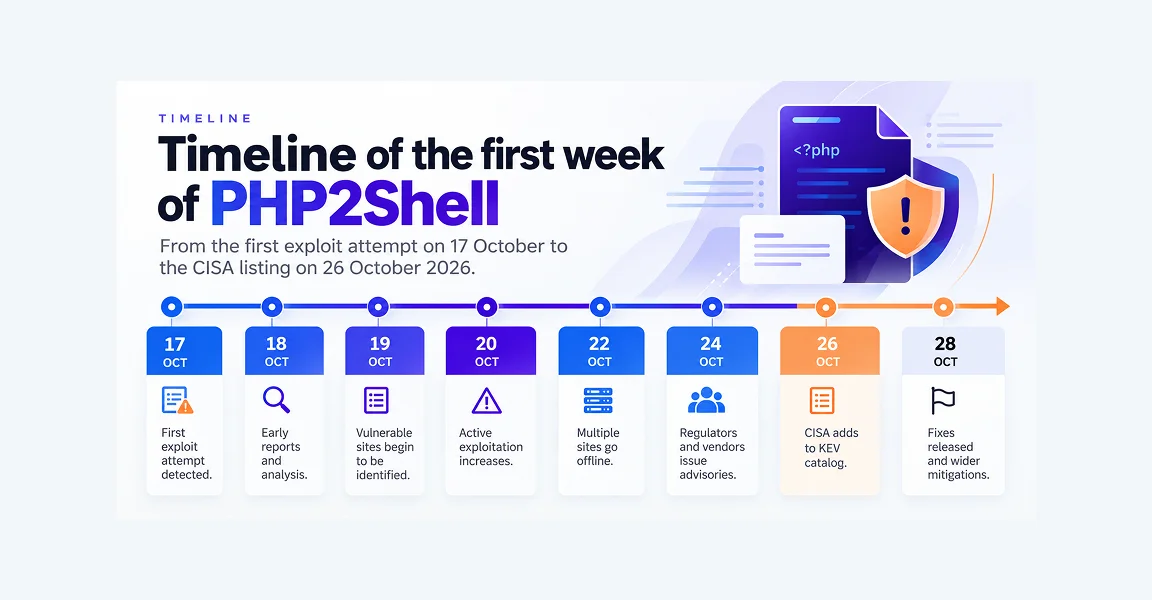
Exploitation is now confirmed, but the evidence is still narrow. A researcher recorded working attacks on decoy servers on 24 October, and CISA added both flaws to its Known Exploited Vulnerabilities catalogue on 26 October. As of 28 October, no victim organisation has been publicly named, and CISA lists ransomware use as unknown.
CVE-2026-109618 and CVE-2026-109619 are memory-handling bugs in PHP itself, the language under WordPress, Magento, Moodle and many business systems. Both are rated 9.2 out of 10. PHP 8.5.12, 8.4.27, 8.3.36 and 8.2.35 fix them. PHP 8.1 and older get no official release, only vendor back-ports, and PHP 8.2 reaches end of life on 31 December 2026.
On 23 October PHP also disclosed a related flaw, CVE-2026-115560. It needs an unusual configuration and is due to be fixed in PHP’s next regular release; until then, PHP advises setting session.upload_progress.enabled=0.
How did governments and regulators respond?
Most moved fast and leaned towards caution. The UK’s NCSC told organisations to patch or consider taking systems offline, and sent more than 50,000 warnings. CISA went further and said systems that can’t be patched should come offline. Some then pointed at suppliers too, not just an organisation’s own servers.
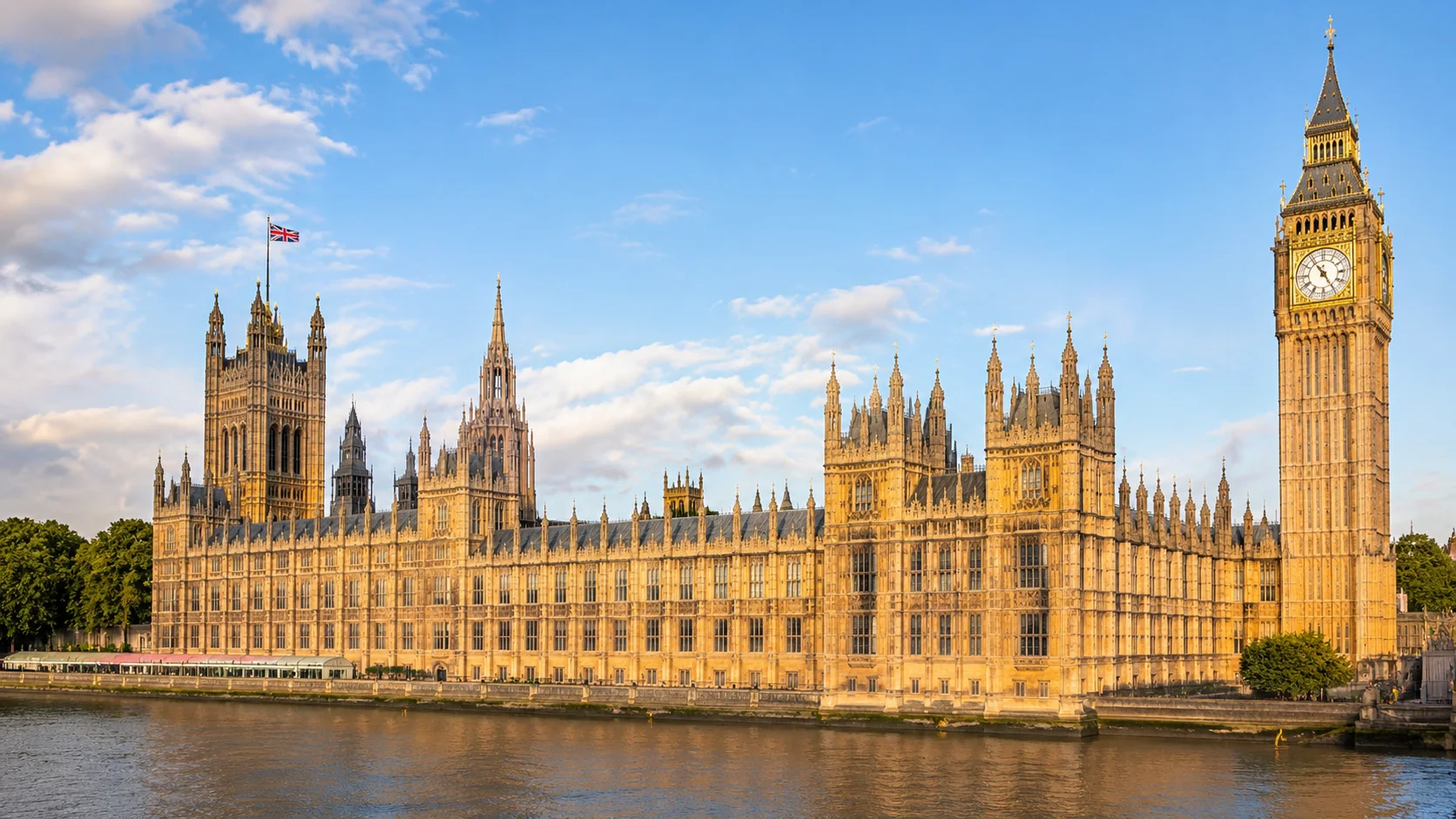
The public sector felt the disruption first. On 22 October the tech minister, Baroness Lloyd of Effra, told the House of Lords that 32 government services were unavailable and four were partly unavailable, “largely” as a precaution, with no confirmed compromise of central government systems. The BBC reported that at least seven of Scotland’s 32 councils and six of its 14 health boards had taken their websites offline at one point on the evening of 21 October.
New York’s financial regulator told the firms it supervises to check their third-party providers too. New Zealand’s NCSC told small businesses that applying an update “is not the end of the process”. In the Lords, the minister’s advice to small firms was to talk to their managed service provider.
How did hosting providers and platform vendors respond?
Managed platforms did much of the work for their customers. Many large shared hosts, including Hostinger, patched within about a day, while customers running their own servers had to patch PHP themselves. Vendors disagreed on whether to go offline, which shows the right call depends on what a system does and holds.
Hostinger says it had installed PHP’s update on every server except customer-managed VPS by the morning of 22 October. Its advice: on managed hosting the version number may not change, so check the build date instead.
Patchstack, a WordPress security firm, warned against unofficial “fix” plugins. Moodle HQ took its public sites offline as a precaution and urged self-hosted Moodle sites, common in schools and colleges, to update PHP immediately. Sansec, which investigates attacks on online shops, told retailers to update PHP but not to take stores offline.
What did industrial and OT vendors say?
Industrial vendors confirmed that PHP turns up in places most buyers wouldn’t expect. Schneider Electric, Siemens and ABB have named affected products. Rockwell Automation said that, so far, none of its products had been confirmed as affected. For manufacturers, the lesson is to ask equipment and software suppliers directly rather than assume.
According to SecurityWeek on 26 October, Schneider Electric named three affected products, including ProLeiT LINEoptimize. ABB said MES deliveries that include a PHP-based help wiki are affected, and Siemens named one RUGGEDCOM device. Several fixes come through the vendor’s support team, not a public download.
That matters because these systems sit close to production. Your host may have patched your website, but a web console on a line-side server is your supplier’s code on your network.
Why was the risk so hard to judge?
Because the evidence kept moving. Two security firms reported successful attacks and then withdrew them, older wording was quoted after it had changed, and trackers measured different things. For a managing director deciding whether to take a website offline, the headlines were a poor guide.
On 22 October Sophos corrected its report of a successful compromise to scanning and failed attempts. On 25 October Palo Alto Networks’ Unit 42 retracted a reported breach at a European government agency. Amazon’s blog describes “broad exploitation attempts in the wild”, yet ITV News on 22 October quoted it as saying the flaw was “now being broadly exploited”.
Then the picture shifted. The decoy-server attacks led to the CISA listing. On 26 October Dream Research reported that an attacker had used PHP2Shell to take over 24 internet-facing firewalls in four countries, then a management server inside a US government-affiliated network. Nobody else has confirmed it, and Dream hasn’t named the vendor or victims.
Patch figures conflict too. On 27 October Wiz said fewer than 53% of initially affected organisations in its data were still vulnerable, while Infrawatch’s tracker, reported by Computer Weekly, showed only 27.2% of visible UK hosts patched. They count different things.
What should UK businesses do now?
Treat PHP2Shell as exploited and don’t wait for a named victim. Find every system running PHP, patch the internet-facing ones first, confirm the fix is actually running and check for a foothold from 17 October. Then get written answers from every supplier whose product or service runs PHP for you.
- List what runs PHP. Websites, portals, internal tools and appliances. The Dutch NCSC keeps a public list of products that depend on PHP.
- Patch internet-facing systems first. Restart PHP workers and rebuild container images, so the new code is live.
- Confirm it. Check the version or build date actually running on each server.
- Use a web application firewall only as a stopgap. It buys time, but it isn’t the fix.
- Look for a foothold. Amazon saw a first attempt on 17 October. Watch for PHP processes starting shells, new admin accounts and unexpected files. For help, the NCSC lists assured incident response providers.
- Chase suppliers in writing. Ask hosts, web agencies, IT providers and equipment vendors what they patched, when, and whether they checked for compromise.
If you hold Cyber Essentials, critical and high-risk updates must be applied within 14 days of release, so fixes released on 21 October are due by 4 November. That’s the outer limit, not the target.
Key takeaways
- PHP2Shell (CVE-2026-109618 and CVE-2026-109619) is now on CISA’s exploited list, though no victim organisation had been publicly named as of 28 October 2026.
- Fixed versions: PHP 8.5.12, 8.4.27, 8.3.36 and 8.2.35. PHP 8.1 and older need a vendor back-port or an upgrade.
- PHP also sits inside hosting, plugins and industrial products, so ask suppliers directly.
- Early claims were withdrawn and figures conflict. Act on official advice, not headlines.
Frequently asked questions
Has PHP2Shell been used in a confirmed attack?
Yes, against decoy servers on 24 October, and CISA added both flaws to its exploited list on 26 October. In a claim nobody else has confirmed, one research firm has reported real intrusions through firewall management interfaces. No victim organisation had been publicly named as of 28 October 2026.
Is my WordPress website affected by PHP2Shell?
Only if your server still runs an unpatched PHP build. Many large shared hosts patched within about a day, but check rather than assume. The flaw is in PHP, not WordPress, so updating WordPress or its plugins won’t fix it. Ask your host to confirm it in writing.
Which PHP versions fix PHP2Shell?
PHP 8.5.12, 8.4.27, 8.3.36 and 8.2.35, released on 21 October 2026. Hosts often patch builds without changing the version number, so check the build date. A related flaw, CVE-2026-115560, is due to be fixed in PHP’s next regular release.
We’re on PHP 8.1. Are we covered?
Not by the PHP project. Some Linux distributions and long-term support vendors provide back-ported fixes, so check with yours. The longer-term answer is moving to a supported version.
What if we can’t patch straight away?
PHP has published temporary mitigations, and a web application firewall may help, but neither is a full fix. If you can’t apply the mitigations either, the NCSC says to consider taking the system offline until it’s fixed, and CISA says it should come offline. Either way, check for compromise.
What matters is knowing where PHP runs in your business and who patches it. TekXera looks after servers and web hosting for UK businesses. If you’d like to talk through your PHP exposure, book a consultation.